Connect

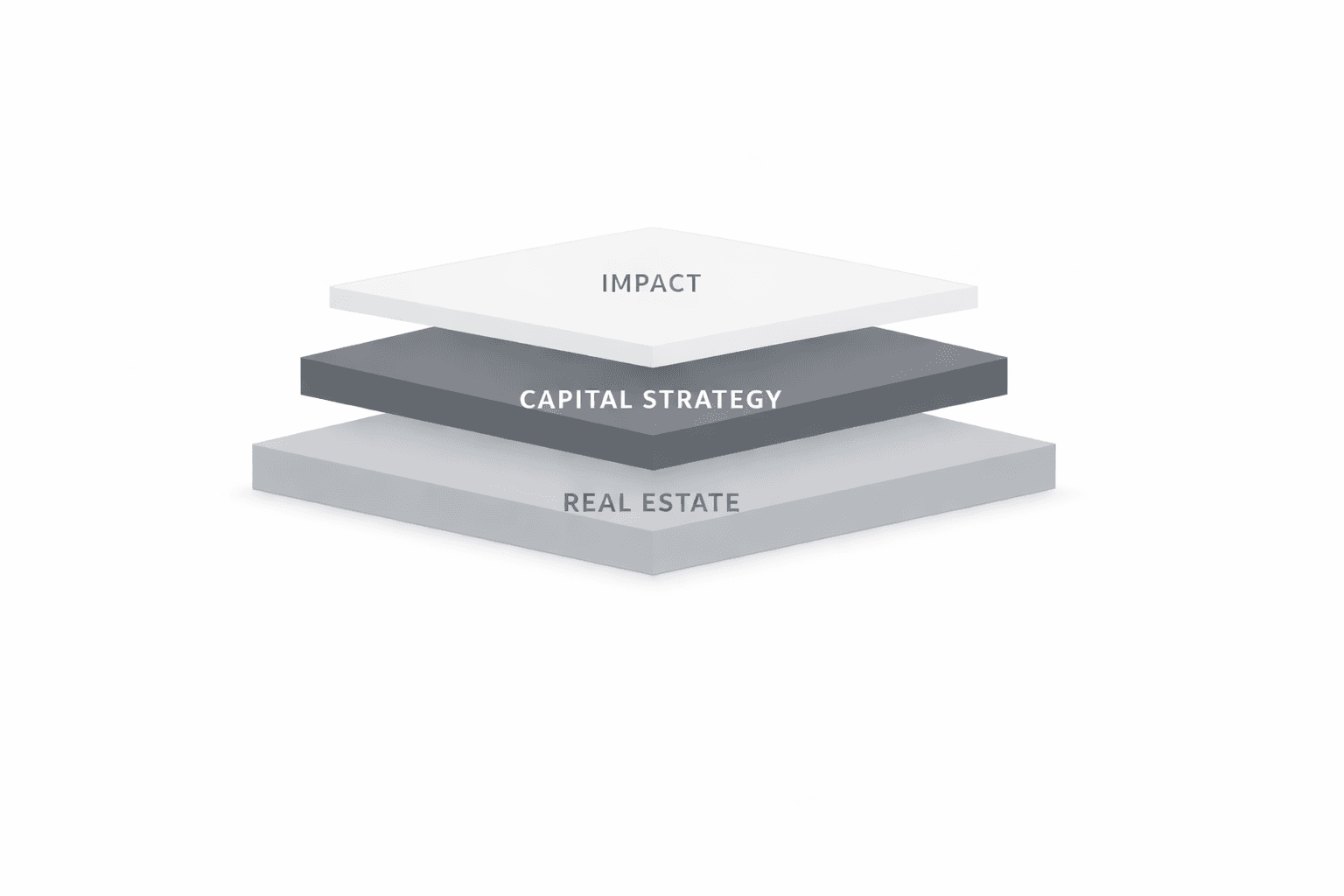
Real estate is social infrastructure
At its best, real estate is more than an asset class — it is infrastructure. Housing, childcare, retail, and healthcare assets, when designed and operated with intention, function as essential systems that support economic stability and socioeconomic mobility.
The built environment does not just reflect outcomes; it helps determine them.
Inclusive capitalism is a growth strategy, not a concession
Sustainable economic growth is strongest when it is broad-based. Expanding access to opportunity increases participation, strengthens aggregate demand, and ultimately benefits both communities and investors.
Institutional capital has a critical role to play in unlocking the potential of overlooked people and places — not as a matter of philanthropy, but as a matter of long-term economic logic.
Fiduciary duty includes sustainability and impact
For institutional investors, integrating environmental and social considerations is not a deviation from fiduciary responsibility — it is an extension of it.
Sustainability factors increasingly shape risk, return, and long-term asset value. Ignoring them introduces exposure; incorporating them improves durability.
Returns and impact are not opposing forces. Misaligned structures make them appear that way.
When capital is structured for long-term durability — not short-term extraction — financial performance and real-world outcomes can be self-reinforcing.